
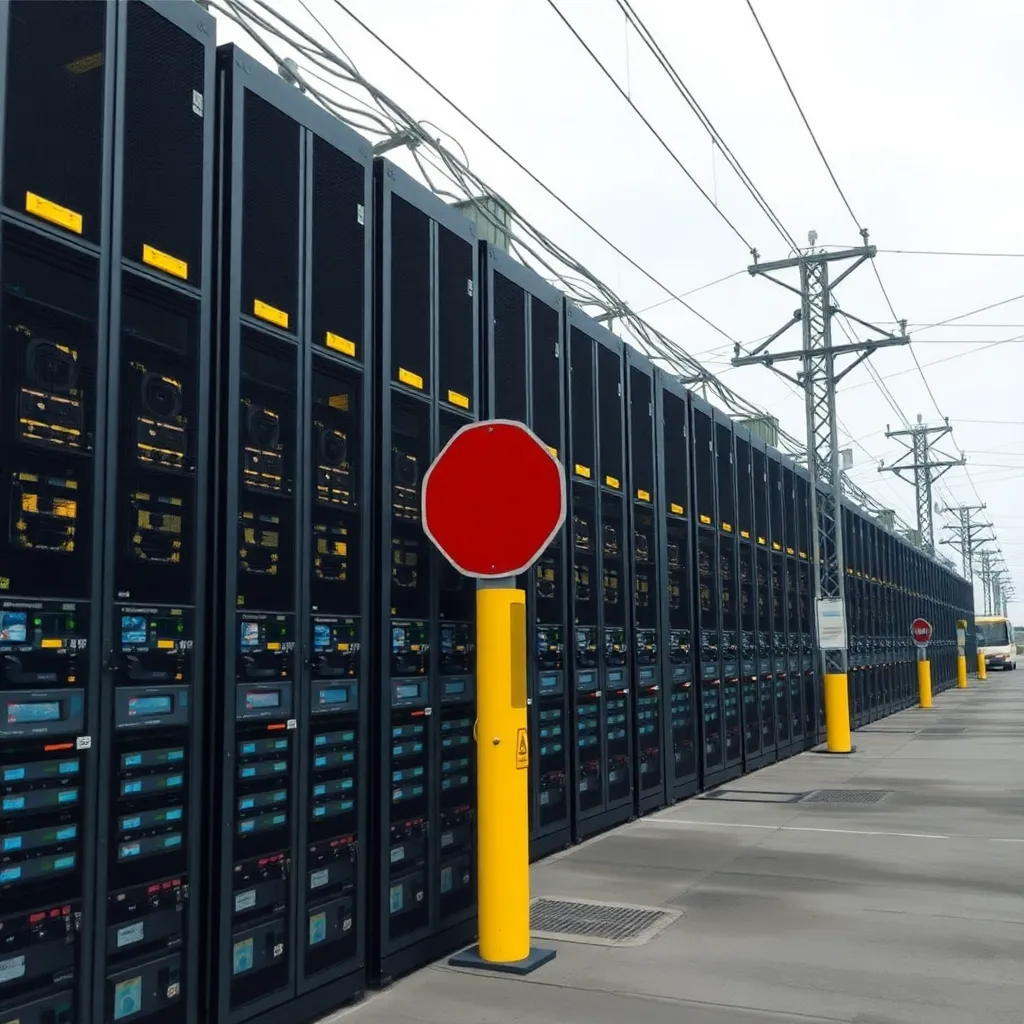
US Data Centers: Surging Power Demand & Grid Strain
The article highlights a significant surge in electricity consumption by data centers across the United States, presenting substantial challenges for national grid planning and sparking critical policy debates. Data centers, defined as facilities housing vast arrays of interconnected computer systems, telecommunications, and storage equipment, are the backbone of the digital economy. They enable essential services like cloud computing, artificial intelligence, streaming media, and cryptocurrency operations, all of which are experiencing exponential growth. This growth directly translates to an escalating demand for power to operate servers, cooling systems, and networking hardware.
While data centers are indispensable for modern technological advancement and economic productivity, their escalating energy footprint poses considerable risks. The primary concern is the potential strain on existing electrical grids, which may struggle to accommodate this rapid increase without extensive upgrades, potentially leading to capacity shortages, increased electricity costs, and even localized power disruptions. Furthermore, the environmental impact is a significant talking point; if this energy demand is met predominantly by fossil fuels, it will exacerbate carbon emissions, complicating efforts to achieve climate sustainability goals. The report underscores the urgency for robust infrastructure development and a strategic shift towards renewable energy sources to power these facilities.
The rising demand has initiated complex policy discussions among regulators, utility companies, and technology firms. These debates focus on strategies to enhance grid resilience, incentivize energy-efficient data center designs, and promote the integration of renewable energy solutions. For instance, some regions are experiencing unprecedented demand spikes from new data center developments, forcing a re-evaluation of long-term energy forecasts and investment in new transmission lines or generation capacity. The article implicitly suggests that without proactive measures, the benefits of digital innovation could be overshadowed by the infrastructural and environmental costs associated with unchecked energy consumption. This necessitates a collaborative approach to ensure both technological progress and energy security.